Carbon Emissions Management at the University of Carthage: Pathway to Net Zero  

The University of Carthage recognizes the urgent global challenge of climate change and affirms its responsibility as an institution of higher education and research to lead by example. The University commits to a structured and ambitious journey toward carbon neutrality (Net Zero), integrating environmental sustainability into its governance, operations, research, and campus culture.

This policy establishes the University's formal commitment to measuring, reducing, and ultimately neutralizing its carbon footprint, while fostering a generation of environmentally conscious graduates and contributing to Tunisia's national climate commitments under the Paris Agreement and the Nationally Determined Contributions (NDCs).

  • Achieve a measurable and verified reduction of greenhouse gas (GHG) emissions across all campuses and operations
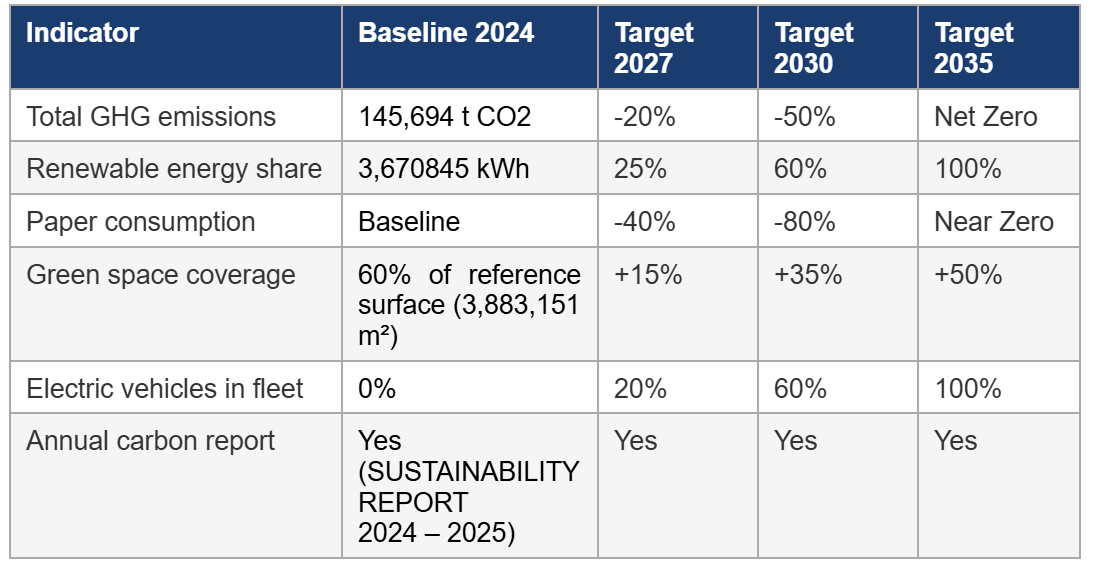
  • Reach Net Zero carbon emissions by 2035
  • Embed sustainability into all academic, research, and administrative activities
  • Establish the University of Carthage as a living lab for climate solutions and green innovation
  • Contribute actively to Tunisia's national and international climate commitments

Phase 1 — Measure & Baseline (2024–2025)

"You cannot manage what you cannot measure"

  • Conduct a comprehensive GHG emissions audit across all University campuses and entities (Scope 1, 2, and 3 emissions)
  • Establish a carbon baseline as the reference point for all future reductions
  • Map all emission sources: energy consumption, transportation, paper and material use, waste, water, procurement, and travel
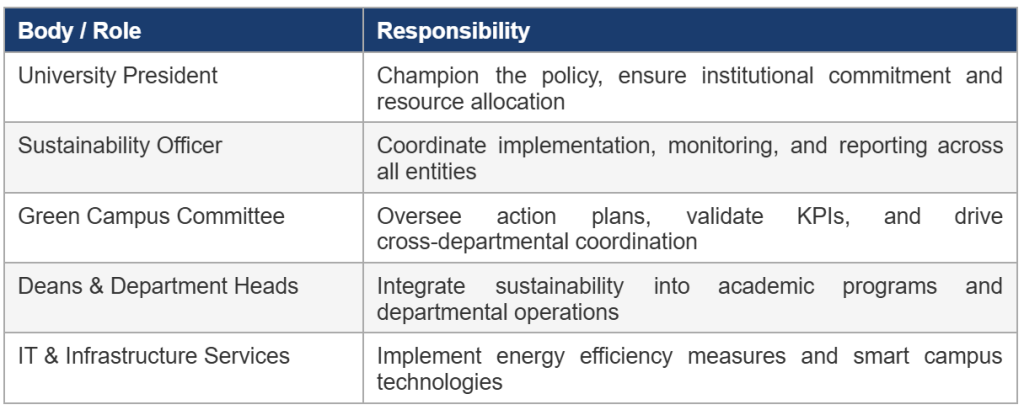
  • Appoint a University Sustainability Officer and establish a Green Campus Committee
  • Subscribe to recognized carbon accounting frameworks (GHG Protocol, ISO 14064)

Phase 2 — Reduce & Transform (2025–2030)

"Reduce first, offset last"

Energy & Infrastructure

  • Conduct energy audits of all University buildings and facilities
  • Progressively install solar photovoltaic panels on university rooftops and grounds
  • Transition to LED lighting and smart energy management systems across all campuses
  • Procure 100% renewable electricity for university operations by 2028

Green Campus & Biodiversity

  • Develop and expand green spaces, tree planting programs, and urban gardens on all campuses
  • Implement sustainable water management practices including rainwater harvesting
  • Introduce biodiversity corridors and native plant landscaping

Waste & Circular Economy

  • Implement comprehensive waste sorting and recycling programs across all campuses
  • Eliminate single-use plastics from all University facilities and events
  • Establish composting systems for organic waste generated in cafeterias and green spaces
  • Leverage the existing Paperless Policy to continue reducing paper waste

Mobility & Transportation

  • Promote and incentivize sustainable commuting for staff and students (cycling, carpooling, public transport)
  • Develop bicycle infrastructure including secure parking and dedicated lanes on campuses
  • Electrify the University vehicle fleet progressively by 2030

Sustainable Procurement

  • Integrate environmental criteria into all procurement and tendering processes
  • Prioritize local, low-carbon, and eco-certified suppliers and products

Phase 3 — Innovate & Engage (2028–2032)

"The University as a climate solution engine"

  • Launch a University Carbon Innovation Fund to support student and faculty-led sustainability projects
  • Integrate climate literacy and sustainability modules into all academic programs across disciplines
  • Establish a Center for Climate Research and Green Transition within the University
  • Partner with national and international universities, research institutions, and industry on joint climate research programs
  • Organize an annual University Sustainability Summit to share progress and mobilize stakeholders
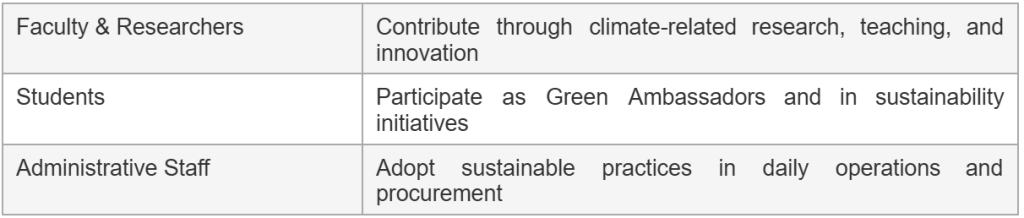
  • Engage students through a Green Campus Ambassador Program

Phase 4 — Offset & Certify (2032–2035)

"Neutralize what cannot yet be eliminated"

  • Invest in certified carbon offset programs for residual emissions that cannot be eliminated (reforestation, renewable energy projects in Tunisia and the region)
  • Seek official carbon neutrality certification from a recognized international body
  • Publish an annual University Sustainability & Carbon Report aligned with GRI and TCFD standards
  • Formally declare Net Zero status by 2035
  • The Paris Agreement — limiting global warming to 1.5°C above pre-industrial levels
  • Tunisia's Nationally Determined Contributions (NDCs) — 45% reduction in carbon intensity by 2030
  • UI GreenMetric — international university sustainability ranking framework
  • ISO 14001 — Environmental Management Systems
  • GHG Protocol & ISO 14064 — Carbon accounting and verification standards
  • UN Sustainable Development Goals (SDGs) — particularly SDG 4, 7, 11, 12, 13


    Adopted by the University of Carthage Administration — In commitment to a sustainable future for our students, our country, and our planet


    "Educating for the world we want to leave behind"